Queensbury NY Senior Real Estate: A Comprehensive Guide for 2026
Queensbury NY Senior Real Estate: A Comprehensive Guide for 2026
Queensbury’s mix of residential neighborhoods near Glen Lake, West Mountain, and Lake George continues to attract older adults planning long-term housing. According to U.S. Census Bureau estimates through 2023, residents aged 65 and older represent between 22% and 24% of the town’s population. That share, already higher than the national average near 17%, shapes everything from home design to local services. Understanding current trends, costs, and resources helps seniors and their families structure decisions that balance independence, safety, and financial stability.
What demographic trends shape Queensbury NY senior real estate in 2026?
Queensbury stretches from busy Glen Street commercial corridors to quieter residential pockets near Hovey Pond Park and Aviation Mall. According to the U.S. Census Bureau, the town’s total population hovers around 29,000, with median age in the mid-40s. That aging profile signals sustained demand for single-story homes, first-floor primary suites, and accessible layouts. Streets such as Bay Road, Quaker Road, and Corinth Road connect these residential areas to medical offices and shopping, reducing driving distances for older residents.
Household composition also influences Queensbury NY senior real estate patterns. Census data indicate average household sizes between 2.3 and 2.5 people, meaning many homes transition from family use to empty-nester occupancy over time. As children move toward Queensbury High School, SUNY Adirondack, or further away, parents often rethink maintenance-heavy lots along Ridge Road or around Meadowbrook Road. Some favor downsizing to townhomes near Northway Plaza, while others prioritize proximity to Glens Falls Hospital and primary care practices along Broad Street in neighboring Glens Falls.
According to Realtor.com market summaries for early 2026, entry-level single-family homes in Queensbury often close in a range from roughly $280,000 to $380,000, while larger properties near Lake George can reach between $650,000 and $900,000. That wide spread encourages some seniors to unlock considerable equity, sometimes exceeding $400,000, by selling long-held properties on streets like Gurney Lane or Aviation Road. Many redirect proceeds into smaller, easier-to-manage residences while reserving funds for healthcare and in-home support.
What housing types and aging-in-place options are most relevant for seniors in Queensbury?
One defining feature of Queensbury NY senior real estate is variety. Traditional capes and ranches cluster off Cronin Road and around Queensbury Elementary School, while newer subdivisions near Queensbury High School incorporate open-concept designs. Single-level ranch homes between 1,200 and 1,800 square feet are particularly attractive for aging in place because they limit stair use. Many properties along Peggy Ann Road or around Russell Street already feature attached garages and level driveways, which reduce winter maintenance hazards for older residents.
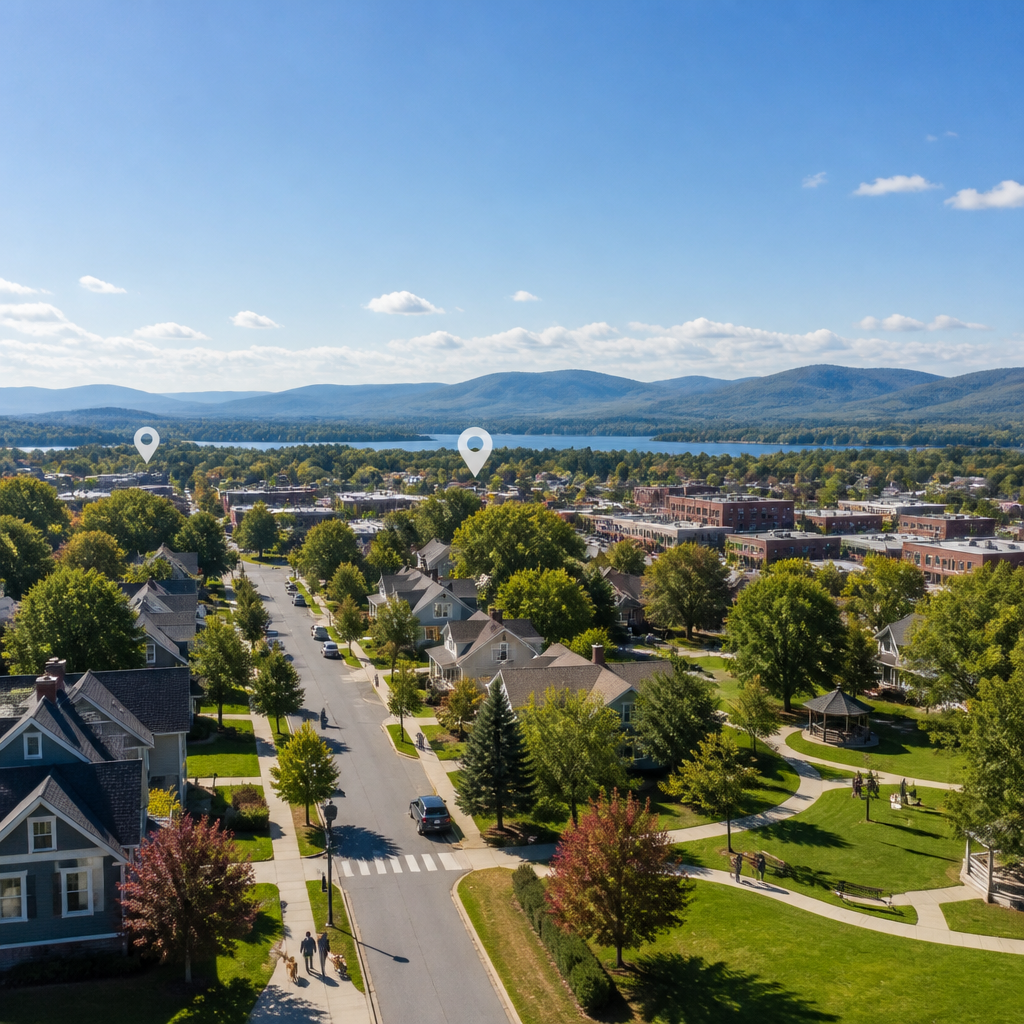
On a clear autumn afternoon along Glenwood Avenue, single-story homes sit beneath maple trees that glow a deep burnt orange, their leaves rustling softly above quiet sidewalks. The faint aroma of woodsmoke drifts from fireplaces as residents return from errands at Aviation Mall or Northway Plaza. Mailboxes stand close to the curb, eliminating long walks, while wide picture windows frame distant views of West Mountain’s ski trails. That combination of sensory comfort and practical layout demonstrates why this style remains popular among retirees.
Condominiums and townhomes, though less numerous than single-family houses, still form an important segment of Queensbury NY senior real estate. Small communities off Bay Road or near Quaker Road often provide exterior maintenance, snow removal, and landscaping through monthly association fees, which can range from about $200 to $350. For seniors with fixed incomes from Social Security payments averaging roughly $1,900 to $2,000 per month, based on data from the Social Security Administration, predictable housing costs can be just as valuable as extra square footage.
How do assisted living and supportive services influence housing choices in Queensbury?
Assisted living communities around Queensbury give families alternatives when independent living becomes challenging. Facilities near Glen Street, close to the Queensbury Senior Citizens Center and Crandall Park, provide meals, housekeeping, and transportation while still encouraging autonomy. According to cost ranges published by A Place for Mom, assisted living in the Queensbury–Glens Falls area typically falls between about $4,000 and $6,000 per month as of 2026. That figure often exceeds basic mortgage or tax expenses, but includes significant care and support.
Inside a common room at a Glen Street assisted living residence, the scent of freshly brewed coffee mingles with faint traces of pine cleaner, while sunlight spills across upholstered chairs arranged in small circles. Soft piano music plays from a speaker, barely louder than the murmur of card games and afternoon conversation. Through large windows, residents watch traffic move slowly toward Hovey Pond Park and Queensbury Town Office, creating a connection to familiar streets even after a transition away from independent housing.
Medical access remains central to Queensbury NY senior real estate decisions. Glens Falls Hospital, located a short drive down Bay Road and Glen Street, anchors regional healthcare. According to service descriptions from Glens Falls Hospital, the system offers emergency services, cardiology, oncology, and rehabilitation, reducing the need for long-distance travel. Many seniors select housing within roughly 10 to 15 minutes of the hospital, particularly along Route 9 or near Dixon Road, to simplify follow-up care, physical therapy visits, and specialist appointments.
How do costs, taxes, and financing tools affect Queensbury NY senior real estate planning?
Property taxes represent a critical factor for older homeowners on fixed incomes. Warren County and Queensbury town tax rates vary by school district, with Queensbury Union Free School District and Glens Falls City School District levies overlapping certain streets. According to county-level summaries compiled by Tax Foundation, average effective property tax rates in many upstate New York counties, including Warren, fall in a range near 1.5% to 2.0% of assessed value. That means a home assessed at $300,000 might carry annual taxes between roughly $4,500 and $6,000.
Financing strategies also intersect with Queensbury NY senior real estate choices. Some older homeowners along Garrison Road or around Upper Sherman Avenue consider downsizing and investing sale proceeds to generate retirement income. Others remain in place but tap equity. According to program descriptions from the U.S. Department of Housing and Urban Development, federally insured Home Equity Conversion Mortgages (HECMs) allow eligible borrowers aged 62 or older to convert part of their home equity into monthly payments or a line of credit, while continuing to live in the property.
Because Social Security cost-of-living adjustments averaged around 3.2% entering 2024, based on figures from the Social Security Administration, seniors must weigh future expense growth against fixed benefits. Utilities for an average Queensbury home might run between $200 and $300 per month, while snow removal contracts can add another $600 to $900 over a winter season. Factoring those recurring costs alongside taxes, insurance, and potential long-term care premiums clarifies whether a large property near West Mountain or Lake George remains sustainable.
What local amenities and services support seniors living independently in Queensbury?
Queensbury offers a network of amenities that complement senior housing options. The Warren County Bikeway, running from downtown Glens Falls past Aviation Mall toward Lake George, provides a paved route for walking, biking, and mobility devices. Hovey Pond Park, near Luzerne Road, features level walking paths, benches, and water views that appeal to older residents seeking low-impact exercise. Grocery stores along Quaker Road and Glen Street, including supermarket anchors at Northway Plaza, reduce driving distances for daily errands and pharmacy visits.
The Queensbury Senior Citizens Center, located on Bay Road near the Town Office complex, delivers programs that often influence real estate decisions. According to information from the Town of Queensbury, offerings include wellness classes, social events, and transportation assistance. Participation can reduce isolation for seniors choosing to remain in single-family homes. Nearby institutions such as SUNY Adirondack and Queensbury High School also host public performances and lectures, allowing older adults to maintain cultural and educational connections without extensive travel.
Walkability varies across Queensbury NY senior real estate corridors. Commercial stretches of Glen Street and Quaker Road feature sidewalks, crosswalks, and bus stops along Greater Glens Falls Transit routes, while residential sections near Glen Lake Road or around Gurney Lane Park tend to rely more heavily on car travel. Residents often target homes within 1 to 2 miles of critical destinations such as pharmacies, supermarkets, and medical offices. That distance equates to roughly a 5- to 10-minute drive, even during winter conditions.
How can seniors and families methodically approach real estate transitions in Queensbury?
Successful Queensbury NY senior real estate planning usually begins several years before a move. Families often start by inventorying maintenance demands on current homes along Ridge Road, Meadowbrook Road, or around Queensbury School campuses. Roof ages, driveway conditions, and stair configurations provide practical data. Next, financial reviews examine mortgage balances that might remain in the range of $50,000 to $150,000, along with retirement savings and Social Security income streams. That information sets boundaries for purchase prices, rent thresholds, and care budgets.
Legal and healthcare planning intersect with housing decisions. Many seniors meet with estate planning attorneys in offices along Glen Street or Maple Street to update wills, powers of attorney, and health care proxies before listing property. Physicians affiliated with Glens Falls Hospital frequently advise on fall risk, chronic disease management, and rehabilitation prospects. Those clinical insights help determine whether a single-story ranch near Hovey Pond Park, a condo close to Aviation Mall, or assisted living near Crandall Park aligns best with likely mobility needs over the next 5 to 10 years.
Real estate marketing strategies must also adapt to senior timelines. Homes around Queensbury Country Club, Glen Lake, or along Bay Road often require decluttering, minor repairs, and staging to appeal to buyers. Some families budget between $3,000 and $7,500 for painting, flooring refreshes, and landscaping. Coordinating listing periods with quieter seasons at Six Flags Great Escape, typically outside peak summer months, can reduce traffic congestion during showings and simplify logistics for older residents who prefer minimal disruption.
The 22% to 24% share of residents aged 65 and older cited at the start of this guide reflects more than a demographic statistic; it represents thousands of households reconciling independence, comfort, and financial limits. That same proportion from the opening underscores why housing design, location, and services in Queensbury cannot ignore senior needs. The Queensbury Senior Citizens Center provides one of the most accessible local entry points into information about transportation, programs, and referrals that intersect directly with housing decisions. During late winter and early spring, particularly before the April listing surge, buyers and sellers who monitor new inventory closely and submit offers or downsizing plans within the first 48 hours of suitable properties hitting the market tend to secure better locations, while those delaying until after Q2 often confront higher prices, fewer single-level options, and heightened competition for accessible homes.
Categories
Recent Posts